
Hiring remote employees from other countries has become a game-changer for UK companies looking to access global talent while reducing costs. With the right strategy, UK businesses can save up to 60% on development costs while accessing skilled professionals from countries like Sri Lanka, India, and Eastern Europe.
This comprehensive guide covers everything UK companies need to know about international remote hiring – from legal requirements and visa processes to cultural considerations and cost comparisons. Whether you’re a London startup or a Manchester SME, this guide will help you navigate the complexities of building a successful international remote team.
We’ll focus particularly on Sri Lanka as a premier destination for UK companies, thanks to its English-speaking workforce, favorable time zones, and proven track record with British businesses.
Legal Requirements for UK Companies Hiring Internationally
When hiring remote employees in other countries, UK companies have several legal pathways:
1. Independent Contractors
- Simplest option for project-based work
- No visa requirements as they work from their home country
- Must ensure proper contractor agreements
- Ideal for: Software development, design, content creation
2. Employee of Record (EOR) Services
- Third-party handles local employment compliance
- Employee works remotely but is legally employed locally
- UK company pays the EOR service
- Best for: Long-term remote employees
3. UK Employment with Remote Work
- Employee on UK payroll working remotely abroad
- Complex tax implications
- Requires careful structuring
- Suitable for: Senior roles, existing UK employees relocating
Recommended Approach: For most UK SMEs, starting with independent contractors from Sri Lanka offers the best balance of simplicity and cost-effectiveness.
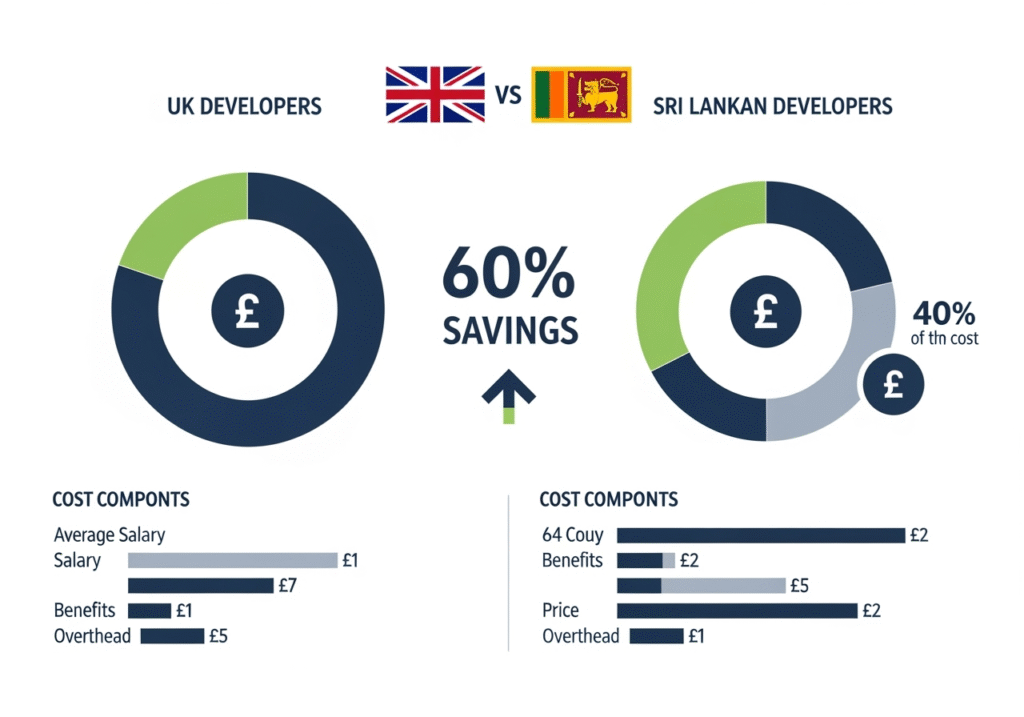
Cost Comparison: UK vs Sri Lankan Remote Employees
Here’s the real cost breakdown UK companies can expect:
UK Developer Costs:
- Junior Developer: £25,000-35,000/year
- Mid-level Developer: £40,000-60,000/year
- Senior Developer: £60,000-80,000/year
- Plus: National Insurance, pension contributions, office costs
Sri Lankan Developer Costs:
- Junior Developer: £8,000-12,000/year
- Mid-level Developer: £15,000-25,000/year
- Senior Developer: £25,000-35,000/year
- Plus: No additional employment costs
Total Savings: 50-70% compared to UK hiring
Real Example: A Manchester startup saved £180,000 annually by hiring a 5-person Sri Lankan development team instead of UK developers, while maintaining the same quality standards.
Why Sri Lanka is Perfect for UK Companies
Time Zone Advantages:
- Sri Lanka is only 5.5 hours ahead of UK
- 3-4 hours of overlapping work time daily
- Morning meetings in UK = afternoon in Sri Lanka
- Much better than India (5.5 hours) or Philippines (8 hours)
English Proficiency:
- English is widely spoken in business
- British colonial history means familiar business practices
- Clear communication with UK teams
- No language barriers in meetings or documentation
Cultural Alignment:
- Similar business etiquette to UK
- Understanding of British work culture
- Professional approach to deadlines and quality
- Easy integration with UK teams
Technical Skills:
- Strong IT education system
- Experience with UK and European clients
- Latest technology expertise
- Quality-focused development practices
How to Get Started: 5-Step Process
Step 1: Define Your Requirements
- List specific skills needed
- Determine project scope and timeline
- Set budget expectations
- Identify communication preferences
Step 2: Choose the Right Partner
- Look for agencies with UK client experience
- Check testimonials from British companies
- Ensure they handle recruitment and management
- Verify their quality assurance processes
Step 3: Start with a Trial Project
- Begin with 2-4 week trial period
- Test communication and work quality
- Assess cultural fit with your team
- Evaluate project management capabilities
Step 4: Scale Gradually
- Add team members based on trial success
- Establish clear processes and workflows
- Set up regular communication schedules
- Implement project management tools
Step 5: Long-term Partnership
- Build ongoing relationships with your remote team
- Provide growth opportunities and training
- Regular performance reviews and feedback
- Consider expanding to larger projects
Conclusion
Hiring remote employees from Sri Lanka offers UK companies an unbeatable combination of cost savings, quality talent, and cultural compatibility. With proper planning and the right partner, you can build a world-class remote team that drives your business growth while significantly reducing operational costs.
Ready to explore how Sri Lankan remote talent can transform your UK business? Contact TalentsBridge for a free consultation and discover how we’ve helped dozens of British companies build successful remote teams. Get started with a risk-free 2-week trial and see the difference quality remote talent can make.